
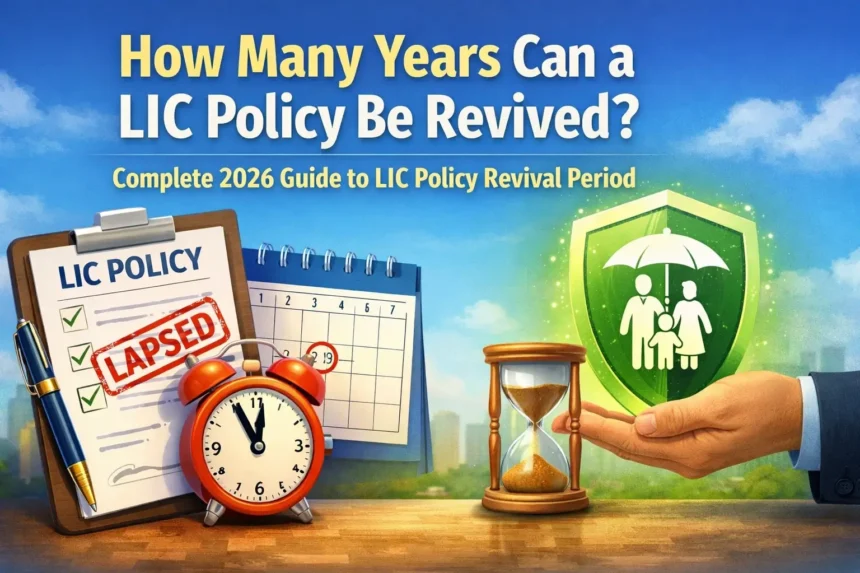
For many Indian families, a LIC policy is the core of their financial safety net. But life happens—job loss, health issues, cash-flow problems—and sometimes premiums get missed. Once the policy lapses, the obvious question is: how many years can a LIC policy be revived?
- Direct Answer: LIC Policy Revival Period
- Grace Period vs LIC Policy Revival Period
- Types of LIC Policy Revival Options
- Step-by-Step: How to Revive a Lapsed LIC Policy
- 1. Check Your Policy Status and Lapse Date
- 2. Contact LIC (Branch or Online)
- 3. Get a Revival Quote
- 4. Complete Health Declarations / Medical Tests
- LIC Revival Form 680 कैसे भरें? स्टेप–बाय–स्टेप LIC Form 680 Online Filling Guide
- 5. Make the Payment
- 6. Receive Revival Confirmation
- What If You Miss the LIC Policy Revival Period?
- Insurance Is Not Enough: Align Your Investments Too
- Practical Tips to Avoid Lapse in Future
- FAQs on LIC Policy Revival Period
- 1. For how many years can a LIC policy be revived?
- 2. Does the LIC policy revival period start from the lapse date or the due date?
- 3. Can every kind of LIC policy be revived within 5 years?
- 4. Is medical examination always required for LIC policy revival?
- 5. Can I revive my LIC policy online?
- 6. What happens if I do not revive my LIC policy within the revival period?
- 7. Is reviving a lapsed LIC policy better than buying a new one?
- off, especially for you
Direct Answer: LIC Policy Revival Period
In most cases, a lapsed LIC policy can be revived within 5 years from the date of the first unpaid premium (FUP), subject to the terms and conditions of your specific plan and LIC’s revival campaigns.
- LIC and various insurance experts clearly state that a lapsed LIC policy may be revived any time within 5 years from the FUP, as long as the policy is still within the premium-paying term.
- Recent LIC campaigns to revive lapsed policies also repeat this 5‑year revival window for eligible individual life policies.
Beyond this LIC policy revival period, revival is usually not allowed, and you may have to buy a fresh policy at higher age, with fresh medicals and possibly higher premiums.
Key takeaway: For LIC, treat 5 years from the first unpaid premium as your outer limit for revival, but act as early as possible to avoid extra medical checks, higher costs, or rejection.


Grace Period vs LIC Policy Revival Period
A common confusion is between the grace period and the revival period. They are not the same.
- Grace Period
- 30 days for yearly/half‑yearly/quarterly premiums and 15 days for monthly premiums, in most traditional LIC policies.
- During the grace period, the policy is still in force. If death occurs, the claim is usually payable after deducting unpaid premium and interest.
- Lapse & LIC Policy Revival Period
- If the premium is not paid even within the grace period, the policy lapses.
- From the date of the first unpaid premium, the LIC policy revival period of up to 5 years starts.
- During this period, you can apply to reinstate the policy, subject to payment of arrears with interest and compliance with health/medical requirements.
So, missing the due date is not the end, but missing both the grace period and the revival window can permanently kill your policy.
Types of LIC Policy Revival Options
LIC usually offers different revival methods, depending on how long the policy has been lapsed and the amount of premium due.
- Ordinary Revival
- Special Revival
- Designed for policyholders who cannot pay all overdue premiums in one shot.
- LIC may reset the date of commencement of the policy and you pay only one due premium, according to your age at revival.
- Can typically be used only once during the entire policy term and usually within around 3 years of policy lapse/commencement, subject to scheme rules.
- Medical reports (Form 680) and declaration of good health may be required.
- Installment Revival (if offered for your plan)
- Revival Campaigns / Special Drives
Practical tip: Always check with your LIC branch or LIC website for the currently active revival schemes. Campaigns can significantly reduce the cost of revival.
Step-by-Step: How to Revive a Lapsed LIC Policy
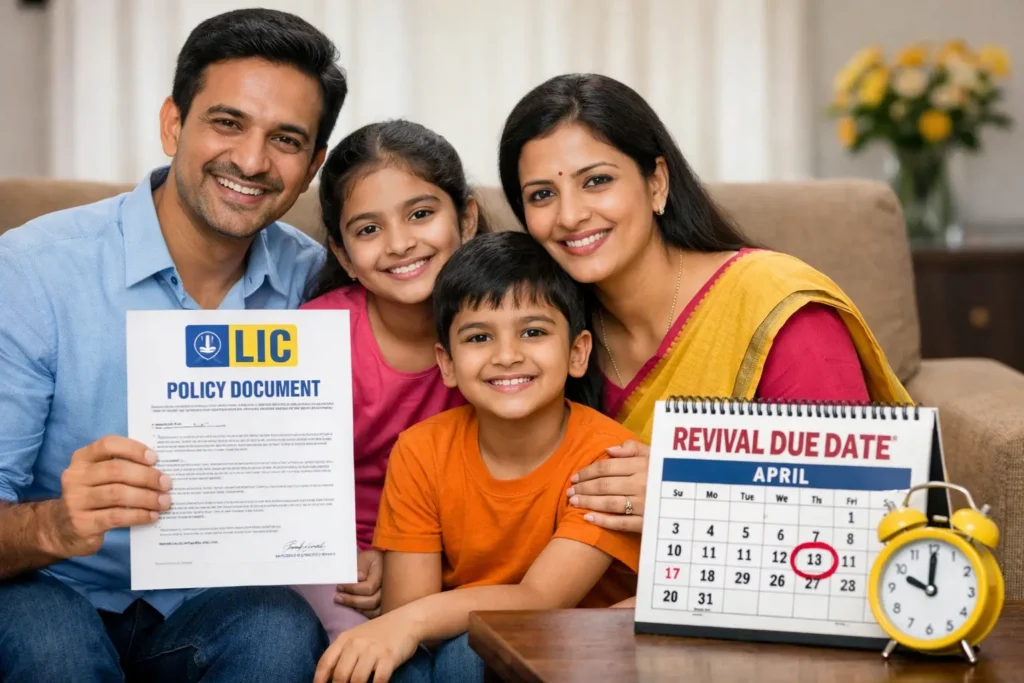
While the exact process can vary by plan, the broad steps to revive a lapsed LIC policy are similar across most traditional policies.
1. Check Your Policy Status and Lapse Date
- Look at your policy bond or LIC online portal to find:
- Policy number
- Date of first unpaid premium (FUP)
- Mode and amount of premium
- This tells you where you stand within the LIC policy revival period (0–5 years).
2. Contact LIC (Branch or Online)
- Visit your home branch (where the policy was issued) or the current servicing branch.
- Many policies can now be revived online or at least initiated online, with payment links and instructions provided through the LIC portal or authorized channels.
- Save LIC Helpline Number 8800290020 and message on WhatsApp your policy number for LIC Policy Status.
3. Get a Revival Quote
LIC will give you a revival quotation that typically includes:
- All overdue premiums
- Interest on overdue premiums (rate as per LIC’s rules at that time)
- Any applicable late fee or charges
- Any extra premium loading, if your health risk is considered higher now
4. Complete Health Declarations / Medical Tests
- For short lapsed periods and smaller covers, a simple declaration of good health may be enough.
- For longer lapsed periods, older ages, or higher sums assured, LIC may:
- The longer you wait within the 5‑year LIC policy revival period, the more likely detailed medicals and stricter underwriting become.
LIC Revival Form 680 कैसे भरें? स्टेप–बाय–स्टेप LIC Form 680 Online Filling Guide
5. Make the Payment
- Pay the revival amount (overdue premiums + interest + charges) via:
- Cash or cheque at branch offices
- Online modes (net banking, UPI, card) where permitted
- Keep the receipt and acknowledgement carefully.
6. Receive Revival Confirmation
- Once LIC approves your revival request, you receive:
- Revival confirmation / endorsement
- Updated policy status showing the policy is back “in force”
- From this point, your risk cover resumes, but be aware: certain clauses like contestability and suicide exclusion may restart counting from the revival date, as per policy wording and regulatory rules.
What If You Miss the LIC Policy Revival Period?
If you cross the 5‑year window from the first unpaid premium:
- Revival is generally not allowed under standard LIC rules.
- You may have to:
- Buy a new policy at your current age
- Undergo fresh medicals
- Pay higher premiums if your health parameters are weaker now
This is why understanding and using the LIC policy revival period early is so crucial.
Insurance Is Not Enough: Align Your Investments Too
A revived LIC policy protects your life risk, but it may not be enough to build the wealth you need for retirement, your child’s education, or other long-term goals.
One balanced approach many investors follow is:
- Use traditional or term insurance (like LIC) for protection
- Use equity mutual funds and stocks for long-term wealth creation via SIPs and direct investing
To start building that investment side in a disciplined way, you can open a Demat and trading account with a reputed full-service broker.
If you do not already have one, you can explore opening an Angel One Demat Account. It allows:
- Easy SIP investing in mutual funds
- Direct equity investing for long-term goals
- Research tools, market news, and advisory support suitable for beginners as well as active traders
You can start your investing journey here:
Angel One Demat Account for SIPs and stock market investing:
By combining a properly revived LIC policy with disciplined investments through a Demat account, you cover both protection and growth in your financial plan.
Practical Tips to Avoid Lapse in Future
- Set auto-debit mandates from your bank account for LIC premiums.
- Maintain a small buffer in your bank balance around premium due dates.
- Use LIC’s online portal and SMS alerts to track upcoming premiums.
- Review your overall cover every few years so you are not paying for unnecessary or unsuitable policies.
- Align insurance premiums with your monthly budget just like EMIs and essential bills.
FAQs on LIC Policy Revival Period
1. For how many years can a LIC policy be revived?
In general, a lapsed LIC policy can be revived within 5 years from the date of the first unpaid premium, subject to the policy still being within the premium‑paying term and satisfying LIC’s medical and underwriting conditions.
2. Does the LIC policy revival period start from the lapse date or the due date?
Technically, the revival period is counted from the date of the first unpaid premium (FUP)—that is, the due date of the premium that was not paid, after which the policy lapses post grace period.
3. Can every kind of LIC policy be revived within 5 years?
Most traditional individual life policies allow revival within the 5‑year window, but certain categories—like some micro‑insurance, health policies or specific ULIPs—may have different terms or be excluded from particular revival campaigns. Always check your policy document and with the LIC branch for exact eligibility.
4. Is medical examination always required for LIC policy revival?
No.
For short lapsed periods and lower sums assured, LIC may accept a simple declaration of good health.
For longer lapsed durations, higher age or higher cover, LIC is more likely to ask for full medical tests and reports before approving revival.
5. Can I revive my LIC policy online?
In many cases, yes. LIC provide online revival options for certain policies, especially for shorter lapses and Sum Assured below 5 Lakh Rs as of 2026. You can log in to the LIC portal or contact your servicing branch to see whether your specific policy is eligible for online revival and digital payment.
6. What happens if I do not revive my LIC policy within the revival period?
If the LIC policy revival period of 5 years is over:
Revival is usually not allowed.
Your policy remains lapsed, and the full risk cover is lost.
You may only get any paid-up value or surrender value, if applicable, as per policy terms.
To regain full cover, you will likely need to purchase a new insurance policy at your current age and health status.
7. Is reviving a lapsed LIC policy better than buying a new one?
In many situations, reviving is cheaper than buying a new policy:
You retain your original entry age, which usually means lower base premiums.
You preserve existing benefits, bonuses (for participating policies), and older policy conditions.
Buying a fresh policy often means higher premiums and stricter medicals at your current age.
However, if the policy is very old, unsuitable, or unaffordable, it can make sense to review your needs, consider term insurance, and complement it with investments through instruments like mutual fund SIPs and direct equities using a Demat account such as Angel One.
By understanding the LIC policy revival period, acting within the 5‑year window, and aligning your insurance with smart investing, it becomes much easier to protect your family and steadily build wealth for the long term.